15 Things to Stop Buying Now for an Easier Christmas
It may still be warm outside and Christmas might feel a long way off, but if you want to make the holidays a little easier on your budget, now is actually the perfect time to start. And I’m not talking about buying Christmas gifts in the summer or putting yourself on a strict no-spend challenge. I’m talking about taking a good look at the things to stop buying before the holidays so you can free up some extra money before the expensive season even begins.
Because here’s the thing…holiday spending doesn’t really start in December. Before we buy the first Christmas gift, there are fall clothes, seasonal decor, takeout, Amazon orders and dozens of other little expenses competing for our money. None seems like a big deal at the time, but $15 here, $30 there and another $50 somewhere else can add up quickly.
And what if, instead of spending that money now, you simply decided to wait? Not forever. Just for now.
I’ve been trying to be more intentional about what I buy lately. There are plenty of things I could buy, but I keep asking myself a different question: Do I really want this more than I want the money?
With the holidays approaching, sometimes the answer is no.
*This post may contain affiliate links, which means that if you buy a suggested product, I will earn a small commission, at no extra cost to you. For more information, see my disclosure page.
This Isn’t About Not Spending
Before we get into the list, I’m definitely not suggesting that you stop enjoying life between now and Christmas. This isn’t about never eating out or never buying yourself anything. It’s simply about temporarily putting some lower-priority spending on hold.
Think of it as a pre-holiday spending slowdown.
Those $20 and $30 purchases can easily turn into a couple hundred dollars over a month. Redirect even $50 a week beginning around September 1 and by the middle of December, you could have roughly $800 available for Christmas.
That could pay for gifts, holiday groceries, travel, Christmas activities or simply help you reach January without holiday expenses following you into the new year.
And you don’t necessarily have to need that money for this to make sense. One of the biggest lessons I’ve learned from living frugally is that being able to afford something doesn’t automatically mean I need to buy it. Sometimes I’d simply rather have the money for something else.
So, before the holiday spending season really gets underway, here are 15 things to stop buying before the holidays…or at least consider buying less of…so you can keep more money available for what matters most.
1. Clothes You Don’t Really Need
This is one I’ve actually been working on myself lately. I’ve become much more intentional about the clothes I’m buying. That doesn’t mean I’m not buying anything. If something fills a real gap in my wardrobe, replaces something worn out or is something I know I’ll wear over and over, that’s different.
But another cute blouse just because it’s cute? Maybe not.
Fall makes this especially difficult. The stores start bringing out sweaters, jackets, boots and all those pretty fall colors while it’s still 90 degrees outside. Suddenly, the clothes you’ve been perfectly happy wearing all summer don’t look nearly as exciting.
Before buying something new, shop your closet first. Pull out your fall clothes and take inventory. You may have forgotten about a sweater you loved last year or a pair of boots you haven’t worn in months. Try putting together a few outfits in combinations you haven’t tried before.
And if you do decide you need something, decide what you’re looking for before you shop. There’s a big difference between “I need a pair of black pants that I can wear several different ways” and “Well, look how cute this is!”
I know which one has gotten me into more trouble over the years.
2. More Seasonal Decor
Oh boy…I’m talking to myself with this one.
I love decorating for fall, and when Hobby Lobby starts putting out all those beautiful fall colors, pumpkins, florals and seasonal decorations, it is very tempting to convince myself that I need just one more thing.
But I distinctly remember telling myself last year, “You do NOT need any more fall decor next year!”
Well…next year is here. And apparently Past Me knew what she was talking about.
I’ve actually shown tremendous restraint because the truth is, I already have plenty. I don’t need another pumpkin simply because it’s a slightly different shade of orange than the pumpkins I already own.
Before buying new seasonal decor, pull out what you have and try using it differently. Move things to another room, create a new arrangement or shop your home for baskets, trays, candlesticks, pitchers and bowls that can work with your seasonal pieces. You may be surprised how different your old decorations look when you use them in a new way.
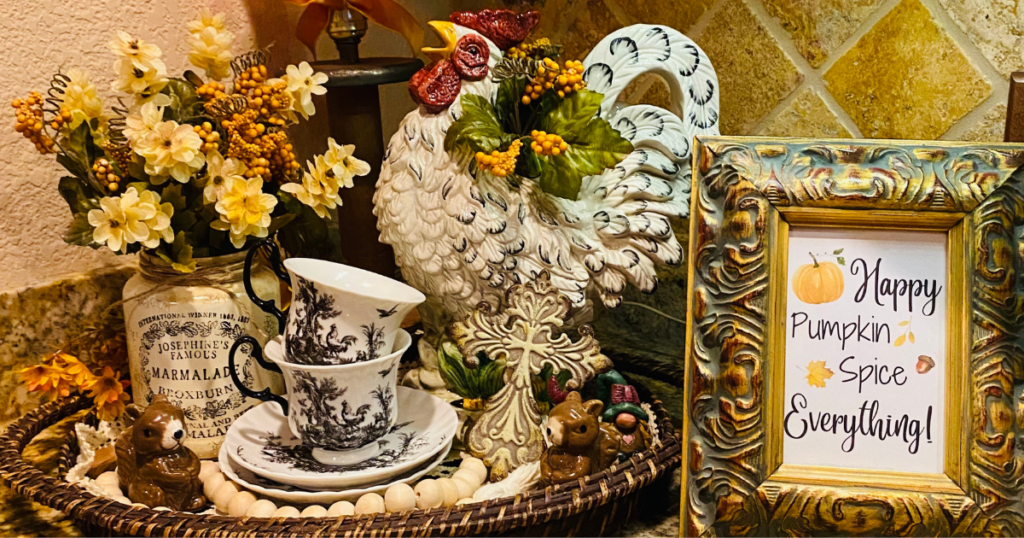
I put this fall kitchen vignette together entirely with things I already had. Sometimes simply rearranging what you own can make your seasonal decor feel new again.
And yes…this applies to thrift stores, too. You know I love a good thrift store find, but something doesn’t become free simply because it’s secondhand. A $6 pumpkin is still $6 you didn’t have to spend.
That doesn’t mean we can never buy another piece of seasonal decor. It simply means this is a good time to be a little pickier. One question I’ve found helpful is, Would I still want this if I had to get rid of something I already own to make room for it?
That’s a pretty good test.
Related: If you want some inspiration for using what you already own, you may enjoy: Why I Love Shopping My Home for Decor
3. Beauty Products You Already Have at Home
How many half-used bottles are currently living under your bathroom sink? Shampoo, conditioner, lotion, face cream, makeup, hair products, nail polish, perfume…most of us have more than we realize.
Before the holidays is a great time for a little use-it-up challenge. Finish the lotions you already own. Use the shampoo sitting in the back of the cabinet. Dig out the lipstick you forgot about before buying another almost-identical shade.
Of course, replace something you genuinely use when it runs out. We’re talking about the extras.
Beauty and personal care products are especially easy to accumulate because individually they don’t seem that expensive. But several $8, $12 and $15 purchases throughout the month can quietly add up.
Take inventory before you shop. You might discover you can make it all the way to Christmas without buying much more than the basics…and wouldn’t you rather put that extra money toward something you’ll actually remember?
4. Books, Magazines and Forgotten Subscriptions
I love the idea of buying books. Unfortunately, buying books and actually reading all the books you’ve bought are two entirely different hobbies.
If you already have a stack of unread books, the next few months might be the perfect time to work through them instead of adding more. And don’t forget the library. Depending on yours, you may have access to ebooks, audiobooks, magazines and other digital resources.
But the bigger opportunity here may actually be subscriptions. Take a few minutes and look through your bank and credit card statements for recurring charges. Streaming services, apps, memberships and subscription boxes you barely use are all worth another look.
A $9.99 subscription doesn’t sound like much. Neither does a $12.99 subscription…until you’re paying for them every single month.
Canceling or even temporarily pausing two or three services between now and January could free up enough money to pay for a Christmas gift or two without changing your lifestyle very much. If you haven’t used something in the last month, ask yourself whether you’ll really miss it for the next few.
5. Takeout and Convenience Meals
I’m not about to tell you that you can’t eat at a restaurant again until January. That’s not realistic for most of us and, frankly, it doesn’t sound like much fun.
But there is a difference between eating out because you’ve planned to and spending $40 or $50 on takeout because it’s 6:00, everyone’s hungry and there’s “nothing to eat.” Those last-minute convenience meals can get expensive fast.
This is one area where a little preparation can save a surprising amount of money before the holidays. Keep a few easy meals available for nights when you don’t feel like cooking. They don’t need to be elaborate. Eggs and toast, grilled cheese and soup, frozen pizza, quesadillas, sandwiches, breakfast for dinner or pasta and jarred sauce can all get dinner on the table without much effort.
Even a $10 frozen pizza from the grocery store is considerably cheaper than ordering $40 worth of food and paying delivery fees and a tip on top of it.
You might also try keeping a short list on the refrigerator of five ridiculously easy dinners you can make with things you usually have on hand. Because when you’re tired and hungry, that’s not the moment you’re going to feel inspired to dig through Pinterest looking for dinner ideas.
And again, this doesn’t have to be all or nothing. If your family normally gets takeout twice a week, cut it back to once. If you eat lunch out three times a week, pack something twice.
Then here’s the important part…move some of the money you didn’t spend into your holiday fund.
And when December arrives, that homemade grilled cheese dinner you ate back in September might just have paid for someone’s Christmas present.

6. Coffee and Drinks on the Go
Yes, I know. You’ve probably heard the “stop buying coffee and you’ll be rich” advice more times than you can count. That’s not where I’m going with this.
If grabbing a coffee with a friend is something you enjoy and you’ve planned for it, by all means, enjoy your coffee. But those drinks we buy simply because we’re out running errands or because stopping has become a habit are worth paying attention to for the next few months.
And it isn’t just coffee. Bottled water, sodas at convenience stores, smoothies and other drinks on the go can easily cost $3, $5 or even $8 at a time. Do that several times a week and suddenly we’re talking about real money.
For the next few months, try leaving the house with a travel mug or reusable water bottle. Make your favorite coffee at home, fill your cup and take it with you. You don’t have to swear off coffee shops until Christmas. You’re simply making the purchase a choice instead of a habit.
That’s really what this entire list is about.
7. Household Products Before You Need Them
I think a lot of us have certain things we automatically toss into the shopping cart when we see them on sale. Cleaning supplies, candles, laundry products, paper goods and toiletries are good examples.
The problem is, sometimes we’re buying backups for our backups.
Before buying more, take a quick inventory of what you already have tucked away under sinks, in closets, in the pantry or out in the garage. This is also a good opportunity to use up products you bought but didn’t particularly love. If they’re still perfectly usable, finish them before replacing them.
Of course, I’m not suggesting that you pass up a genuinely great price on something you know you’ll need soon. Stocking up can absolutely save money. But there’s a difference between strategic stockpiling and buying something simply because the sale sign made us feel like we should.
Before it goes in the cart, ask yourself…Do I actually need more of this before Christmas?
8. Craft and Hobby Supplies
This one is hitting especially close to home for me this year.
I love making things, and the months leading up to Christmas are usually when I really get into craft mode. I often make some of my Christmas gifts and decorations, and over the years I’ve accumulated a pretty good stash of supplies.
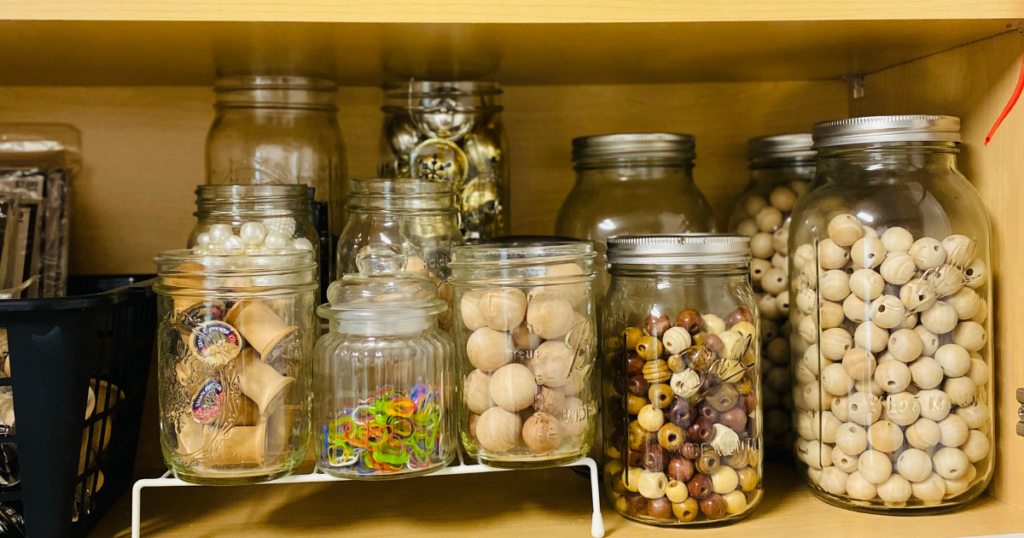
So this year, instead of heading out to buy everything new for each project, I’m challenging myself to see just how much I can make with what I already have.
And honestly…I’d love to see that stash go down!
If you’re a crafter, you probably know exactly what I’m talking about. Fabric, ribbon, yarn, scrapbook paper, paint, beads, wood pieces, wreath forms, florals, vinyl and all those miscellaneous little supplies that we just know we’ll use someday have a way of multiplying.
Before you walk into the craft store with a brand-new project in mind, shop your craft stash first. Instead of deciding exactly what you want to make and then buying everything required to make it, turn the process around. Look at what you already have and ask, What can I make with this?
You might already have almost everything you need for Christmas gifts, ornaments or decorations. Don’t be afraid to substitute a different ribbon, use paint you already own or adapt an idea to fit the supplies you have. Sometimes those limitations actually make us a little more creative.
There’s another benefit here, too. If you make a Christmas gift using supplies you already own, you’re doing double duty. You’re avoiding the cost of buying more craft supplies and potentially avoiding the cost of buying a gift.
So if you’ve been saving a stash of craft supplies for “someday,” maybe someday has arrived. I’m planning to put mine to work over the next few weeks.
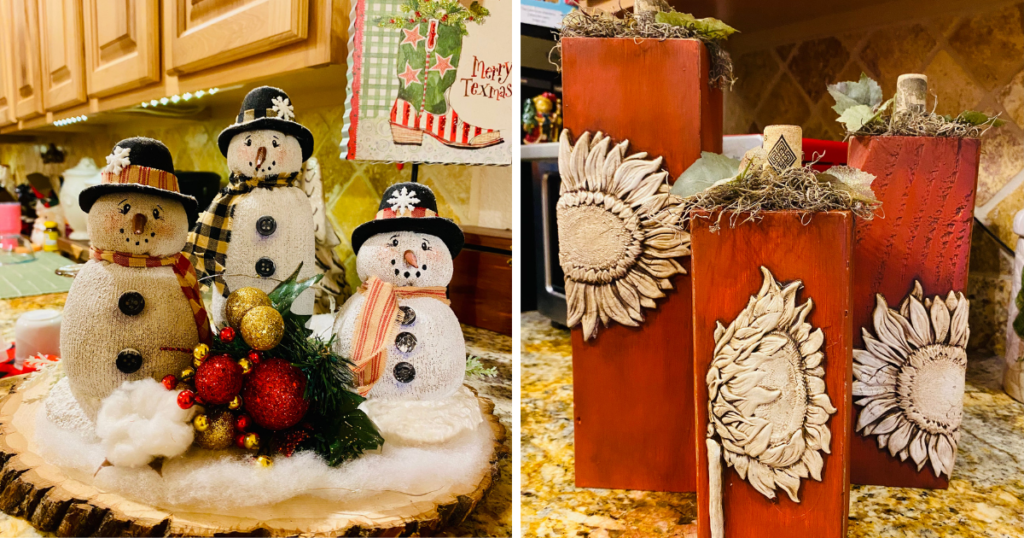
The snowmen were made with socks, rice, Modge Podge and paint, while the pumpkins started as scrap 4 x 4s and were decorated with air-dry clay moulds and supplies I already had.
9. Kitchen Gadgets and Small Appliances
Kitchen gadgets are another category where it’s surprisingly easy to convince ourselves that one little purchase will make life so much easier. Sometimes it does. But sometimes that must-have gadget gets used twice and then spends the next five years shoved behind the crockpot.
Unless something you regularly use breaks and genuinely needs replacing, consider putting kitchen gadgets and small appliances on hold until after the holidays.
And then, of course, Black Friday arrives.
A $100 appliance marked down to $59.99 sounds like a $40 savings, but if you weren’t planning to buy it in the first place, you didn’t save $40.
You spent $60.
That doesn’t mean Black Friday deals are bad. If you’ve been planning to replace your coffee maker and the model you want goes on sale, that’s smart shopping. Buying an air fryer or an espresso machine or fancy mixer because the price is too good to pass up is something entirely different.
A bargain is only a bargain when it’s something you actually need.
10. Home Organization Products
Here’s another category that can fool us into thinking we’re being productive while we’re actually just shopping.
Baskets, bins, drawer dividers, storage containers, labels and pretty organizing systems can make us feel like we’re about to get our entire house under control. And sometimes those products really are useful.
But before you buy them, declutter first.
There’s no point in spending $40 on containers to beautifully organize things you don’t actually need to keep.
Once you’ve decluttered, look around your house for containers that might work before buying anything new. Baskets, jars, boxes and trays can often do the job perfectly well. You may discover that once you’ve removed the excess, you don’t need another organizing product at all.
And if you do need something, you’ll know exactly what size and type to buy instead of coming home with attractive bins and trying to figure out what to put in them.
Organization should help us manage what we own…not give us another reason to own more.
11. Random Amazon Purchases
Amazon can be incredibly convenient. Maybe a little too convenient.
There was a time when buying something required us to get dressed, drive to a store, find the item, stand in line and hand over actual money. Now we can think, “I could use one of those,” tap a button and have it sitting on the porch tomorrow.
That convenience makes small purchases especially easy to overlook. A $9 gadget here, a $14 household item there and a $17 “I didn’t even know this existed until five minutes ago” purchase don’t feel particularly significant on their own. But add them together over a month and you might be surprised.
Try using a 48-hour rule for nonessential online purchases between now and the holidays. Put the item in your cart or save it for later, but don’t check out immediately. Give yourself two days to decide whether you still want it.
Quite often, the excitement wears off.
You may forget about it entirely, decide you don’t really need it or realize you already own something that will do the same job. If you still want it after 48 hours and it fits comfortably into your budget, then you can make an intentional decision to buy it.
The goal isn’t to make shopping difficult. It’s just to put a little space between wanting and buying.
12. Gifts for Yourself While Shopping for Others
This one can sneak up on us once Christmas shopping begins.
You head into a store looking for a gift for someone else, and suddenly you’re surrounded by sales, gift sets and things you wouldn’t normally see. Before you know it, Christmas shopping has turned into “one for them…and one for me.”
And retailers make this especially easy during the holidays. Buy one, get one half off. Spend $50 and get a free gift. Add another $20 to qualify for free shipping. All of those offers can sound like savings while quietly encouraging us to spend more than we intended.
Before you start Christmas shopping, consider putting yourself on the “not right now” list.
If you see something you love, take a picture of it or add it to your wish list. Someone may be looking for a gift idea for you anyway. And if you still want it after Christmas, you can always reconsider it then.
Besides, waiting has another advantage…you won’t accidentally buy yourself the exact thing someone else has already wrapped and put under the tree.
13. Extra Groceries When Your Pantry Is Full
The weeks leading up to Thanksgiving and Christmas are some of the most expensive grocery weeks of the year. Between holiday meals, baking ingredients, appetizers, special treats and feeding extra people, that grocery bill can climb pretty quickly.
That’s why the next couple of months are a great time to start using some of what you already have.
Take a look through your pantry, freezer and refrigerator before making your grocery list. You may have meat buried in the freezer, several boxes of pasta, canned goods you’ve forgotten about or enough odds and ends to put together quite a few meals.
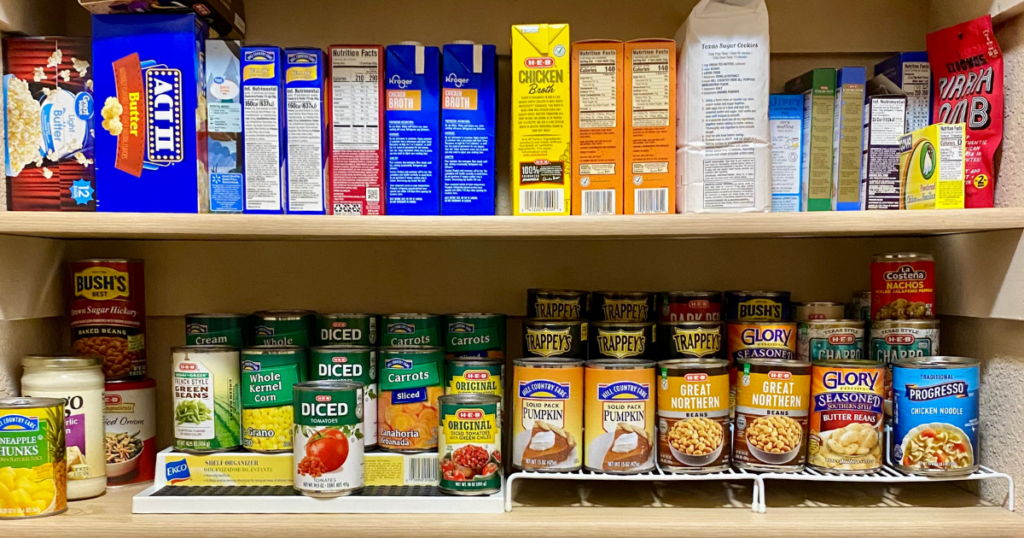
You don’t have to do a strict pantry challenge unless you want to. Maybe one night each week becomes a “use what we have” dinner. Build the meal around something from the freezer or pantry and only buy the few fresh ingredients you need to complete it.
This also gives you a chance to use older food before it expires or gets freezer burned, which saves money in another way. Food we’ve already paid for that eventually ends up in the trash is money wasted.
When Thanksgiving turkeys, Christmas hams, casseroles, pies and all those holiday leftovers start filling the refrigerator and freezer, you’ll be very glad you cleared out some space beforehand.
14. Furniture and Nonessential Home Projects
There’s something about fall that makes me want to work on the house. Suddenly, the room that looked perfectly fine in July seems like it needs a new rug, new curtains, a different chair and maybe a complete makeover.
But unless there’s a repair that genuinely needs attention, the months before the holidays might be a good time to hit pause on some of those projects.
I’m not talking about inexpensive projects you can do with things you already own. You know I’m a big believer in shopping your home, rearranging furniture, repurposing things.
I recently did exactly that in my home office. I rearranged the furniture, brought in a rug I already owned and restyled my bookcases using things I had around the house. It gave the room a completely different feel without turning it into an expensive decorating project.

I’m talking about the projects that start with, “I think I’ll just change this one little thing,” and somehow ends up later with three trips to the store and $300 missing from the checking account.
Make a list of the things you’d like to change and come back to it after the holidays. You may still want to do them in January or February, and if so, you’ll be able to plan and budget for them properly. You might also discover that you don’t care nearly as much about that new rug three months from now as you do today.
15. Anything You’re Buying Just Because It’s on Sale
If there’s one thing I want you to remember from this entire list, it might be this:
A sale doesn’t save you money if it convinces you to buy something you weren’t going to buy.
And we’re heading straight into the biggest sale season of the year…Fall clearance, early Black Friday deals, Black Friday, Cyber Monday, holiday sales, flash sales, friends and family discounts, and limited-time offers will all be competing for our attention.
It’s easy to get so focused on how much we’re supposedly saving that we forget to ask how much we’re spending.
Before you buy something simply because the price looks irresistible, ask yourself one question:
Would I want this if it weren’t on sale?
If the answer is no, there’s a pretty good chance you don’t need it.
This doesn’t mean you shouldn’t take advantage of holiday sales. I certainly plan to! The difference is that the sale should help you buy something you already intended to buy…not tell you what you suddenly need.
How Spending Less Before the Holidays Adds Up
Making your own list of things to stop buying before the holidays is a great start, but this next part is what can make all of those little decisions really pay off.
Give that money you don’t spend somewhere to go.
If you skip a $40 takeout order or decide against a $35 sweater but leave that money sitting in checking, it’s easy for it to disappear somewhere else.
Instead, move some of those savings into your Christmas sinking fund. If you don’t have one, this is a perfect time to start. It can be a separate savings account, an envelope or whatever method keeps the money from being absorbed into everyday spending.
You can transfer money as you skip bigger purchases or simply choose an amount at the end of each week. Don’t worry about keeping perfect records or transferring $4.72 every time you make coffee at home. I don’t want saving for Christmas to become another full-time job.
The point is to make some of your savings tangible.
Remember our earlier example? Redirect an average of $50 a week beginning around September 1 and you could have roughly $800 set aside by the middle of December.
You didn’t have to find an extra $800 in your budget all at once. You built it from small decisions you probably wouldn’t have remembered a few months later.
Instead of arriving in December wondering how Christmas got so expensive again, you’ll have money waiting for it.
You Don’t Have to Stop Spending Before the Holidays
Please don’t look at this list and think I’m suggesting that you stop spending totally, the next few months and say no to everything you enjoy.
I’m certainly not going to.
I’ll still go out to eat sometimes. I’ll probably buy something between now and Christmas that isn’t absolutely necessary. And if I happen across an amazing thrift store find, I’m making no promises!
The goal isn’t perfection. It’s awareness.
Maybe only five of these things to stop buying before the holidays apply to you. Pick the areas where temporarily cutting back would be fairly painless and start there.
For me, I’m going to keep reminding myself that I don’t need more fall decor, I’m being more intentional about the clothes I buy, and I’m especially determined to use some of that craft stash over the next few weeks. If I can turn supplies I already own into Christmas decorations and a few homemade gifts, even better.
That’s what frugal living is really about to me. It isn’t always about whether or not you can afford something. It’s deciding where you want your money to go before it disappears on things that don’t matter nearly as much.
So maybe the question to ask yourself between now and Christmas isn’t, “Can I afford this?”
Maybe it’s…
“Would I rather have this…or would I rather have the money?”
You might be surprised how often you choose the money.
What are you going to stop buying, or buy less of, before the holidays this year?
I’d love to hear your thoughts.
For more money-saving tips and strategies, be sure to subscribe to our newsletter at Love to Frugal! You can also follow me on Pinterest, Facebook & Instagram for even more money saving, frugal living tips!
Other Posts You May Also Be Interested In:
Why Be Frugal When You Can Afford More?
25 Easy Ways to Save Money When You’re Burned Out
10 Frugal Habits To Make Your Life Easier