How to Be Frugal When You Never Had To
Learning how to be frugal can feel a little strange when you’ve never really had to watch your money before. Maybe you’ve always been able to fill your grocery cart without paying much attention to the total, replace something when it broke, grab takeout when you didn’t feel like cooking or buy something you wanted without giving it much thought.
But sometimes life changes. Maybe your income has changed, you’re approaching retirement and realizing you want your money to last, or you’re simply trying to make better decisions with what you have. Or maybe nothing dramatic has happened at all…everything just seems to cost so much more than it used to, and the money that once felt like plenty isn’t stretching nearly as far.
If that sounds familiar, here’s the good news: frugality is a skill, and it’s one you can learn. You don’t have to become an extreme couponer, give up everything you enjoy or suddenly start making everything from scratch. You simply need to learn a few habits that people who have lived frugally for years tend to do almost automatically.
I’ve been frugal for so long that many of these things are just second nature to me. I don’t necessarily think, I’m being frugal right now. It’s simply the way I approach spending and using what I have. But I’ve learned over the years that some of the simplest habits can make a surprisingly big difference…especially if you’ve never really needed to practice them before.
*This post may contain affiliate links, which means that if you buy a suggested product, I will earn a small commission, at no extra cost to you. For more information, see my disclosure page.
Frugality Isn’t About Being Cheap
Before we go any further, let’s clear up one thing. Being frugal and being cheap aren’t the same thing.
Being cheap usually means choosing the lowest price regardless of quality, value or sometimes even how that decision affects someone else. Frugality is about being intentional with your money and getting the most value from what you spend.
Sometimes the frugal choice actually costs more upfront. A pair of quality shoes that lasts five years may be a better purchase than three inexpensive pairs that wear out quickly. Paying someone to repair a good appliance might make more sense than replacing it. And sometimes spending money on something that genuinely improves your life is absolutely worth it.
Learning how to be frugal isn’t about spending as little as humanly possible. It’s about making sure your money is going toward the things that matter to you instead of disappearing on things that don’t.
1. Find Out Where Your Money Is Going
If you’ve never needed to watch your spending closely, you may honestly have no idea how much some parts of your life are costing you. When there’s enough money in the checking account to cover everything, it’s easy to pay the credit card bill, buy groceries, order from Amazon and go out to eat without ever adding it all together.
Before you start cutting anything, spend a little time figuring out where your money is actually going. Look through the last month or two of your bank and credit card statements and pay attention to groceries, restaurants, subscriptions, online shopping, entertainment and all those miscellaneous purchases that don’t seem significant at the time.
You may discover you’re spending $250 a month eating out and didn’t realize it, or that several little subscriptions have quietly become a pretty substantial monthly expense. Those $20 and $30 Amazon purchases can add up surprisingly fast, too.
You don’t need a complicated spreadsheet or a color-coded budget to start. You’re simply looking for patterns. Once you can actually see where your money is going, it becomes much easier to decide what you’d like to change.
Related: How to Track Your Spending And Save More Money
2. Learn the Difference Between a Need and a Preference
This sounds incredibly simple, but I do this all the time, and it has probably saved me more money over the years than I could ever calculate.
Maybe you need dinner, but that doesn’t mean it has to come from a restaurant. An upcoming wedding might require something nice to wear, but before buying a new dress, take a look at what’s already in your closet. Even something as simple as needing a place to store extra blankets doesn’t automatically require ordering a pretty new set of matching baskets. Sometimes the solution is already sitting right in front of us.
A lot of things we call needs are actually preferences, and there’s nothing wrong with preferences. I like nice things as much as anyone else! The important part is recognizing the difference and realizing that you’re making a choice.
Before I buy something, especially something for the house, my first instinct is usually to look around and see if I already own something that can do the same job. Very often, I do.
When you start thinking this way, that little pause between I need something and I’m going to buy something becomes incredibly valuable. Sometimes you still decide to buy it, and that’s fine. But you’d be surprised how often you won’t.
3. Stop Automatically Buying the Solution
This goes hand in hand with the last point and is probably one of my most ingrained frugal habits. We’ve become accustomed to solving problems by purchasing something. The closet is messy, so we buy organizers. We’re tired of the living room, so we buy new decor. Something breaks, so we replace it. We need something for a one-time project, so we order it.
Instead, I’ve trained myself to look around my house first. Can something I already own do the same job? Can I move something from another room? Repurpose something? Repair what I have? Borrow it? Make do with something else?
I’ve done this for so many years that it’s usually my first reaction now, and I can’t tell you how much money it has saved me.
This is also one of the reasons I love “shopping my home.” Sometimes I’ll decide a room needs a little refresh and instead of heading to the store, I’ll walk around the house and see what I can move from one room to another. Something I’ve grown tired of in one spot can look completely different somewhere else.
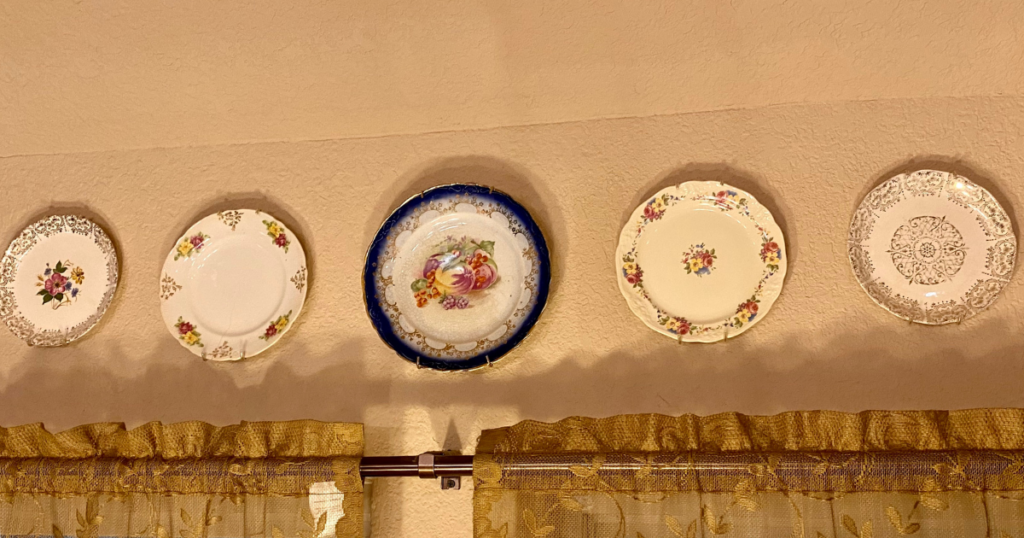
The plates on this wall are a perfect example. Instead of buying something new to fill the space, I gathered plates I already owned and turned them into wall decor. They’re sentimental in addition to being beautiful (and just right for this spot).
Frugal people don’t necessarily have a clever solution for everything. We’ve simply learned to put another step between the problem and the purchase.
Before you buy the solution, take five minutes and look around. You might already own it.
4. Use What You Have Before Buying More
Here’s another habit that sounds almost too simple to make a difference: use what you already have before you buy more.
I recently cleaned and reorganized underneath my bathroom vanity and got a perfect reminder of this. I found several bottles of body lotion, some opened and some brand new, along with four or five bottles of different brands of hairspray. Apparently, at some point I’d tried them, decided they weren’t my favorites and tucked them away.

Meanwhile, how easy would it have been to pick up another bottle the next time I went shopping?
So I’ve made myself a deal…I’m using what I have before I buy any more lotion or hairspray. It may not be my favorite brand, but if it works, I’m using it!
You can do the same thing all over your house. Look through your refrigerator, freezer and pantry before grocery shopping. Check your closet before buying another outfit. Go through your cleaning supplies before picking up another bottle. Look at your seasonal decor before buying more.
Most of us don’t have a shortage of things. We have a habit of buying more before using what we already have.
“Use what I have first” is one of the easiest frugal rules you can adopt, and it costs absolutely nothing.
5. Get Comfortable With Waiting
One of the most valuable frugal skills I’ve learned has nothing to do with coupons, budgets or sales. It’s simply learning not to buy something the minute I decide I want or need it.
Anytime I need something, I almost always check the thrift store first. I’d say nine times out of ten, I eventually find what I’m looking for. It may not happen that same day, but that’s the point…most things aren’t nearly as urgent as we make them out to be.
I do something similar with Amazon. I have a birthday/Christmas Wish List, a Home Decor Wishlist and a regular Shopping List, and when I see something I’d like to have, I often add it to one of those lists instead of putting it in my cart. It’s still there if I decide later that I really want it, but something funny happens. A lot of those things just stay on the list.
And that’s perfectly fine.
The urgency surrounding many purchases is completely manufactured. We see something and feel like we need to make a decision right now, when most of the time we don’t.
Give yourself permission to wait. Check the thrift store. Look on Marketplace. Watch for a sale. Add it to a list and come back to it later. Sometimes you’ll find it cheaper, sometimes you’ll find something else that works just as well, and sometimes you’ll realize you really didn’t want it that badly after all.
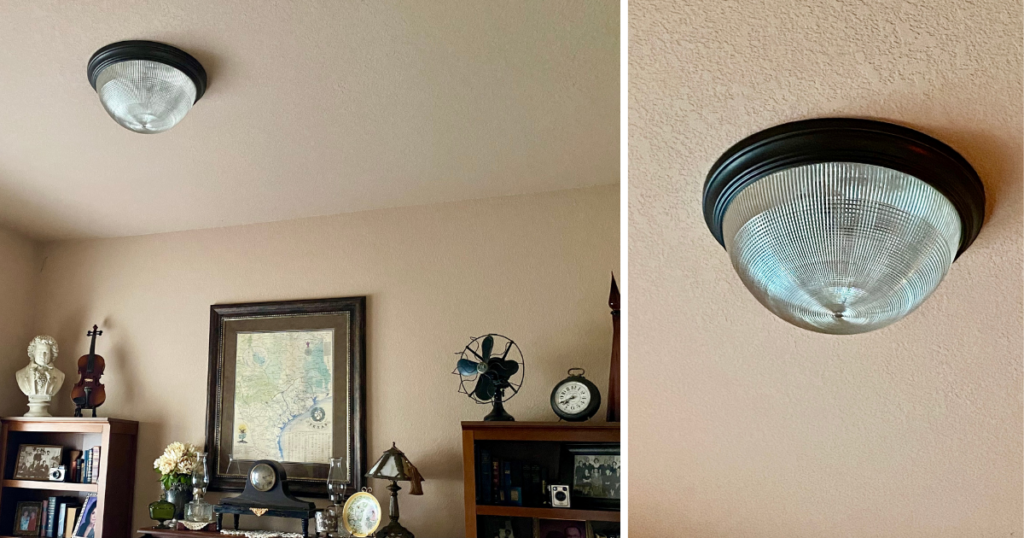
I do this with things for our home, too. When I wanted to replace the ceiling fan in our study with a light fixture, I didn’t rush out and buy one new. I kept looking until I found this one secondhand for just $7.97. It was exactly what I needed…and waiting saved me quite a bit of money.
6. Learn What Things Should Cost
You don’t need to memorize the price of everything you buy, but when you’re learning how to be frugal, it helps tremendously to know the normal price of the things you purchase most often.
Start with maybe 10 or 15 items you buy regularly. It might be milk, eggs, chicken, ground beef, coffee, laundry detergent, toilet paper, dog food or shampoo. After you’ve paid attention for a while, you’ll begin recognizing what a genuinely good price looks like.
You’ll also begin recognizing when a giant SALE sign isn’t offering much of a bargain at all.
Experienced frugal shoppers often do this without even thinking about it. We’ve seen the same products and prices enough times to know when it’s a good time to stock up and when it’s better to wait.
You don’t need to create an elaborate price book unless you want to. Just start paying attention. That’s really all it takes.
7. Be Careful How Much You Pay for Convenience
Convenience can be wonderful, but it can also be incredibly expensive.
Food delivery, precut produce, individual snack packages, prepared meals, grocery delivery, rush shipping and last-minute purchases all save us time, and sometimes they’re absolutely worth paying for.
The goal isn’t to eliminate every convenience from your life. It’s to stop paying for convenience without realizing you’re doing it.
For example, buying a prepared meal might make perfect sense on an unusually busy day. Buying prepared meals several nights a week because you never decided what was for dinner is something different. Grocery delivery may be worth every penny if it saves you hours and keeps you from impulse buying. Again, the point isn’t that convenience is bad…it’s that it should be a choice.
Frugality isn’t about doing everything the hard way. It’s about deciding which conveniences are worth your money instead of paying for all of them by default.
Related: Hidden Costs Of Convenience: How It’s Draining Your Finances
8. Learn to Think One Step Ahead
This may be one of the least glamorous money-saving tips you’ll ever hear, but it’s also one of the most useful. Learn to think one step ahead.
Thaw something for dinner before you’re hungry. Bring a bottle of water when you leave the house. Keep a snack with you. Check the gas gauge before you’re running on empty. Make a grocery list before going to the store. Look ahead at birthdays instead of buying gifts at the last minute.
So much unnecessary spending happens because we’re hungry, tired, rushed or unprepared. Suddenly the easiest solution is also the most expensive one.
You don’t have to plan your entire life down to the minute. Just start asking yourself, What am I going to need later?
That one little question can save you money over and over again.
9. Don’t Automatically Upgrade Your Lifestyle
There’s a funny thing that happens when we start making more money. Our expenses have a way of growing right along with our income.
The car gets nicer, vacations get more expensive, the phone gets upgraded, another subscription gets added and we start eating out more often. Things that once felt like luxuries quietly become normal expenses. Then, if money gets tighter, it can be incredibly difficult to go backward.
One of the smartest frugal habits you can develop is learning to appreciate what you already have when it’s still serving you well. If your car is reliable, does it really need replacing? If your phone works perfectly well, do you need the newest model? When your closet is already full, is another shopping trip really going to add anything to your life?
Here’s something I think is especially important: you can afford something and still decide not to buy it.
Having the money doesn’t automatically mean you need to spend it. In fact, learning that lesson is one of the reasons many people eventually reach a point where they have more financial breathing room.
10. Start With Three Frugal Habits
If you’ve read this far and you’re thinking, Okay…but where do I actually start? please don’t try to change everything at once.
Pick three things and practice them for the next month. Maybe you’ll plan your meals before grocery shopping, wait 48 hours before making nonessential purchases and use what you already have before buying something new.
That’s enough.
Once those things begin to feel normal, add another habit. Then another.
That’s how frugality becomes a lifestyle instead of a temporary money-saving challenge. You’re not spending every waking moment asking yourself how you can save another dollar. You’re simply developing habits that naturally cause you to spend less and waste less.
How to Be Frugal Without Feeling Deprived
This is probably the part I wish more people understood. Frugality doesn’t have to feel miserable or restrictive.
I’ve practiced many of these habits for so long that I don’t really think about them as sacrifices anymore. Looking around my house before buying something isn’t deprivation. Waiting until I find something at the thrift store isn’t deprivation. Eating the food that’s already in my refrigerator isn’t deprivation. Keeping something that still works isn’t deprivation.
They’re simply habits.
And that’s really the secret to learning how to be frugal. No one wakes up one morning knowing every trick for stretching a dollar. Over time, you learn to pause before buying, become more resourceful, pay attention to prices and plan ahead. Eventually, it becomes second nature to look for another solution before assuming that every problem requires spending money.
Little by little, you start looking at money differently.
And here’s something else I’ve learned over the years…you don’t have to wait until you’re struggling financially to live frugally.
Frugality can certainly help you through difficult seasons, but it can also help you save more, prepare for retirement, travel, give generously, worry less about money and spend more freely on the things that truly matter to you.
The Goal Isn’t to Spend the Least…
The goal isn’t to spend the least amount of money possible. It’s to stop wasting money on things that don’t really matter so you have more for the things that do.
And if you’ve never had to be frugal before, don’t feel like you need to learn everything at once. Start with one decision, then another. Before long, you may be surprised by how natural it becomes.
What about you? What’s one frugal habit that has saved you more money than you ever expected…or one you’re trying to learn right now?
For more money-saving tips and strategies, be sure to subscribe to our newsletter at Love to Frugal! You can also follow me on Pinterest, Facebook & Instagram for even more money saving, frugal living tips!
Other Posts You May Also Be Interested In:
Frugal Living Isn’t Extreme Anymore…It’s Survival!
Why Be Frugal When You Can Afford More?