Tiny Habits That Save Money and Build Wealth
Sometimes, we think we have to overhaul our entire lifestyle to make progress, but what if I told you that the real magic is in tiny little habits that save you money every single day? If you’ve ever felt overwhelmed by the idea of saving money…like you have to do it all perfectly or make drastic changes just to get ahead, you’re not alone. I’ve been there too, more times than I can count, staring at my budget wondering what to cut next or how I’d make it stretch one more week.
But here’s something I’ve learned over the years, especially while living frugally and intentionally: it’s not always the big leaps that change things. It’s the little daily steps that you do consistently, that have the greatest effects.
That’s where these tiny habits come in. These are small, often overlooked actions that don’t feel like a big deal in the moment, but when done consistently, they create real, lasting change. Like putting your spare change in a jar or packing your lunch just one extra day a week, these tiny tweaks add up in powerful ways.
In this post, I’m sharing 20 simple habits that anyone can start right now and can potentially save you money. You don’t need a fancy app, a lot of time, or a whole new lifestyle. All you need is a willingness to be a little more mindful with what you already have.
Let’s look at the tiny habits that can lead to big savings without sacrificing the life you love.
*This post may contain affiliate links, which means that if you buy a suggested product, I will earn a small commission, at no extra cost to you. For more information, see my disclosure page.

20 Tiny Habits That Save Money Every Day”
These tiny habits that save money may not seem like much on their own, but together they make a big impact.
Track Every Dollar (Yes, Even the Small Ones)
Why it works: It’s the little expenses that sneak past us, like the quick snack run or the $3 charge for a digital download. When we’re not keeping tabs on them, they can really pile up.
Tiny habit in action:
Each night, take a moment…just a minute or two…to jot down what you spent that day. Use a simple notebook, a free budgeting app, or even a sticky note on the fridge. It doesn’t need to be perfect, just consistent.
You’ll start to notice patterns quickly: maybe you’re picking up a soda every afternoon or ordering more takeout than you realized. That awareness alone helps you start making different choices, and it’s much easier than trying to overhaul everything all at once.
Check out this post on: How to Track Your Spending And Save More Money
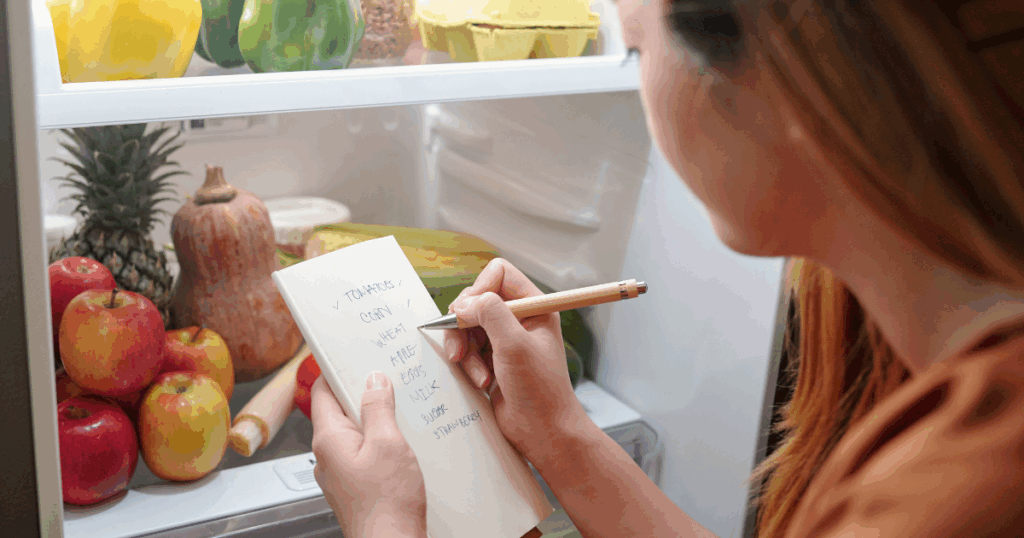
Do a Daily “Fridge Scan”
Why it works: How often have you bought something at the store, only to realize you had it at home going bad in the back of the fridge? It happens to all of us. A daily check can help you stop wasting food and money.
Tiny habit in action:
Before dinner (or even while the coffee’s brewing in the morning), open your fridge and take a quick peek. What needs to be used soon? What leftovers are still hanging around?
Challenge yourself to use one thing that day before it goes bad. Whether it’s turning wilting spinach into a soup or repurposing last night’s chicken into a wrap, this small habit can save you hundreds of dollars a year, and help you feel more in control of your kitchen.
Make Your Coffee at Home (Most Days)
Why it works: Coffee runs are fun and feel like a treat, but they’re pricey when they become daily habits. Just cutting back a few days a week can make a big difference.
Tiny habit in action:
Keep your favorite coffee on hand and prep your coffeemaker the night before. Add a little extra joy to it…maybe a seasonal creamer, a reusable iced coffee cup, or a fun coffee bar setup on your counter. Making it feel like a treat makes you more likely to skip the drive-thru.
You don’t have to give up your favorite coffee shop forever. Just save it for special days. It’s all about balance, not sacrifice.

Wait 24 Hours Before Buying Non-Essentials
Why it works: We’ve all been there. Scrolling late at night and clicking “add to cart” on something we don’t really need. Giving yourself a little time to pause can prevent regret and save money.
Tiny habit in action:
When the urge to buy hits, don’t tell yourself “no”. Just tell yourself “not yet.” Add the item to a list in your phone called “Things I Want,” and give yourself 24 hours (or even 72!) before you purchase.
More often than not, you’ll forget about the item entirely or realize you already have something similar. If you still want it, you can buy it with confidence instead of guilt.
Unplug Devices at Night
Why it works: Even when electronics are turned off, they often continue to draw electricity. It’s called phantom power, and while it’s small, it adds up on your monthly bill.
Tiny habit in action:
Before heading to bed, do a quick “unplug round.” Power down computers, unplug chargers, and flip off power strips for TVs or game systems. I call this “putting my house to bed”.
You won’t notice a change in your routine, but you will see a small dip in your electric bill over time. It’s one of those habits that quietly save money, in the background.
Have a “Use What You Have” Day Weekly
Why it works: Most of us have a pantry full of ingredients we’ve forgotten about like a half a box of pasta, canned beans, frozen veggies. Using them up stretches your food budget further than you think.
Tiny habit in action:
Choose one day a week to make dinner entirely from what’s in your fridge, freezer, or pantry…no extra shopping allowed.
It’s fun to get creative (think of it as a kitchen scavenger hunt), and you’ll waste less and appreciate more of what you already have.
You might enjoy: Meals You Can Make With Almost Nothing: 10 Easy Ideas
Carry a Reusable Water Bottle
Why it works: Buying drinks on the go can become a sneaky budget drain. $1 here, $2 there. It doesn’t seem like much until it becomes a weekly habit.
Tiny habit in action:
Keep a water bottle in your bag or car, and refill it before you leave the house. You’ll be less tempted to grab something while you’re out.
Plus, staying hydrated keeps you healthier and may even reduce snack cravings. It’s a win for your body and your budget.

Set a Daily Spending Limit
Why it works: Without limits, spending can become mindless. A small daily cap helps you stay conscious without feeling restricted.
Tiny habit in action:
Give yourself a daily budget, maybe $5 or $10, for small discretionary purchases. If you skip spending one day, roll it over or tuck it into savings.
This habit gives you the freedom to spend without guilt, while naturally curbing impulse buys.
Do a 5-Minute Declutter
Why it works: Clutter often leads to duplicate purchases (“Where are the batteries? Let’s just buy more.”). A quick tidy-up helps you stay organized and avoid overspending.
Tiny habit in action:
Set a timer for 5 minutes each evening and choose one small area to tidy. This could be your purse, a drawer, the car console. You’ll be surprised how much peace and clarity this creates over time.
Plus, you’ll rediscover things you forgot you owned and stop buying more of what you already have.

Make No-Spend Days a Weekly Tradition
Why it works: Giving your wallet a rest, even just one day a week, helps reset your habits and shows you how much you can do without buying something.
Tiny habit in action:
Pick one day a week (like Monday or Sunday) to declare a no-spend day. No extras…just the essentials you already have on hand.
Make it fun! Light candles, play a game, take a walk, cook a cozy meal. Frugality isn’t about feeling deprived. It’s about enjoying the richness of what’s already in front of you.
Building in a weekly no-spend day is another one of those tiny habits that save money while reshaping how you think about spending.
Double Up When You Cook
Why it works: Let’s be honest. Cooking at home saves money. Cooking extra at home saves time and money. It’s one of the best ways to avoid the last-minute takeout trap.
Tiny habit in action:
Whenever you’re making a meal that freezes well or reheats easily, double the recipe. Store the leftovers for lunch or tuck them in the freezer for a future “I-don’t-feel-like-cooking” night. I do this often, when I make my Sweet & Sour Meatloaf, soups or just about anything that freezes well.
It’s the frugal version of meal prepping…simple, efficient, and stress-saving.
Use Cash for One or Two Categories
Why it works: Swiping a card doesn’t “feel” like spending in the same way that handing over physical money does. Using cash makes your spending more tangible.
Tiny habit in action:
Try using cash for just one area, like groceries or eating out. When the cash is gone, that’s it for the week.
It’s a gentle way to build discipline, and it’s surprisingly effective at keeping you on track.
Always Shop With a List
Why it works: Going into the store without a list is like heading into the woods without a map. You’ll come out with a lot more than you planned for.
Tiny habit in action:
Keep a running grocery list throughout the week. Check your pantry and fridge before you shop, and stick to what’s on the list.
You’ll shop faster, spend less, and avoid the “oops, forgot milk again” trips that always lead to extra purchases.
Round Up Your Purchases into Savings
Why it works: Small change often gets ignored, but with the right system, it adds up without you noticing.
Tiny habit in action:
Use an app or bank feature that rounds your debit card purchases to the nearest dollar and saves the spare change. Even just 50 cents a day adds up to $180+ a year with no effort required.
It’s a painless way to build a little cushion over time.
Audit Subscriptions Every Few Months
Why it works: We sign up for things with the best intentions, but months later, we’re paying for services we no longer use or even remember.
Tiny habit in action:
Put a reminder on your calendar every three months to go through your bank statement and check for subscriptions. Cancel anything you haven’t used in 30 days.
It’s quick, empowering, and can easily free up $20–$100 or more a month.
Set a Weekly “Money Check-In” Date With Yourself
Why it works: Life gets busy, and it’s easy to lose track of where your money’s going. A short weekly check-in keeps you grounded and aware before small issues turn into big problems.
Tiny habit in action:
Pick one day a week (Sunday evening or Friday morning work well) to sit down for just 10–15 minutes. Review your bank balance, upcoming bills, and recent spending. Ask yourself: What’s coming up this week that I need to plan for?
Doing this weekly helps you avoid late fees, insufficient charges, and last-minute spending scrambles. It gives you a sense of control that brings peace of mind. This is one of those tiny habits that save money by helping you avoid late fees and unexpected expenses.
Keep a “Running Out” List on Your Fridge or Pantry Door
Why it works: How often do you run to the store for one thing and come back with ten? Having a central list helps you group your shopping and avoid impulse buys.
Tiny habit in action:
Stick a small notepad or whiteboard on your fridge or pantry. Whenever you notice you’re almost out of something, write it down immediately. When it’s time to shop, just grab the list and go. I’ve been doing this for years and it works great!
This reduces wasteful trips, prevents overbuying, and helps you stay organized. It also means fewer “emergency” runs to the store that throw your budget off track.
Declutter Your Wallet Once a Week
Why it works: A messy wallet can lead to missed receipts, forgotten gift cards, and expired coupons…aka lost money. Keeping it clean helps you stay on top of your spending tools.
Tiny habit in action:
Take 3–5 minutes each week to clean out old receipts, check for unused gift cards, and organize your cash. You might be surprised what you find, like that $10 reward card you forgot about or a return receipt that’s still valid.
It’s like giving your finances a mini fresh start, and it helps you stay mindful of what you’re carrying around.
I also take the opportunity to FETCH my receipts before they get too old. Receipts equal money and I “fetch” all of them. If you don’t use or have never heard of Fetch, it’s an app that gives users points for scanning shopping receipts and completing other activities like playing games, which can then be redeemed for gift cards and other rewards. You can download FETCH and use my code: 2H6A6 or use this link to get a bonus for signing on.
Plan Tomorrow’s Meals Tonight
Why it works: When you know what you’re eating ahead of time, you’re far less likely to fall into the trap of takeout or last-minute grocery stops.
Tiny habit in action:
Before bed, take 2 minutes to decide what you’ll eat the next day. Lay out ingredients to thaw, set up the slow cooker, or just mentally note what needs using up.
This tiny act eliminates stress, reduces food waste, and helps you avoid costly “what’s for dinner?” panic purchases.
Use a “Wait Box” for Items You’re Thinking of Tossing or Replacing
Why it works: Decluttering is great, but sometimes we’re too quick to toss or replace something when it could still be useful. This leads to unnecessary spending.
Tiny habit in action:
Instead of immediately throwing out or replacing an item, put it in a designated “wait box” for 30 days. If you don’t miss it or find another use for it, then consider donating or replacing it.
This helps prevent impulse replacements and encourages you to appreciate what you already have. Plus, you’ll often find creative ways to reuse or repurpose those items. That’s another win for your budget!
Final Thoughts: It’s the Little Things
If you take one thing from this post, let it be this: you don’t need to do everything all at once. Start with one small habit…something easy and doable and let it snowball.
The beauty of frugal living isn’t in the big, dramatic sacrifices. It’s in the simple daily choices that slowly but surely bring you more peace, more margin, and more joy. When you put these tiny habits that save money into practice, you’ll see how small steps add up to big wins for your budget.
Remember, you’re not just saving money. You’re creating a life that reflects your values. One where you’re in charge of your spending, not the other way around.
So, friend—pick one of these habits and give it a try this week. You might be surprised how much it adds up.
For more money-saving tips and strategies, be sure to subscribe to our newsletter at Love to Frugal! You can also follow me on Pinterest, Facebook & Instagram for even more money saving, frugal living tips!
Other Posts You May Also Be Interested In:
Frugal Living with ADHD: Simple Strategies That Actually Work
Proven Strategies For Saving More Money On Monthly Bills
Budgeting With A Variable Income-Valuable Money Tips To Know